Ergonomics
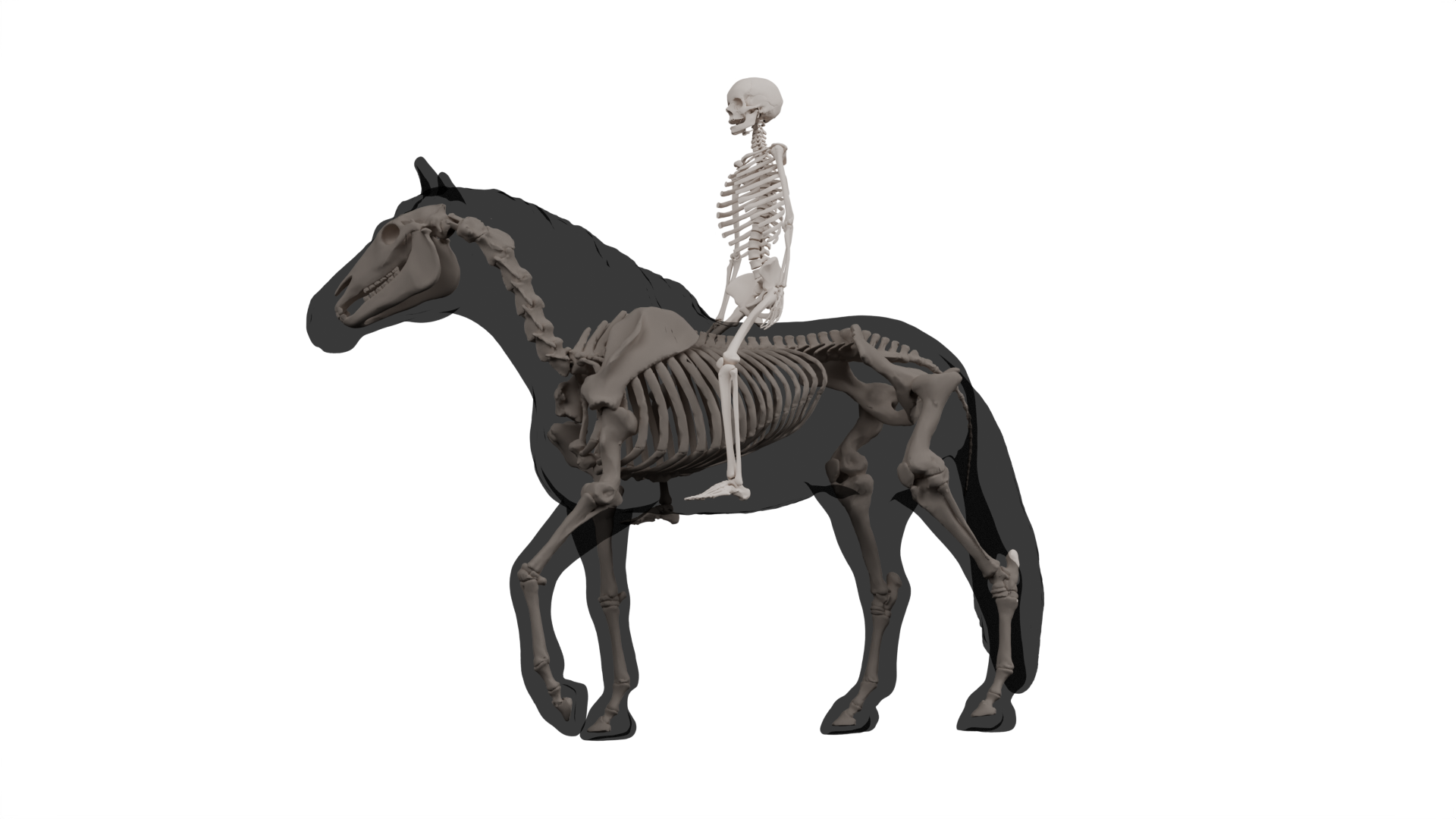
Structural analysis of two of the main groups of objects humans use to ease the ride on horseback.
Traditional saddle with saddle tree
The traditional riding saddle consists of a variety of different components. The main purpose of a saddle is to stabilize the rider's position on the horse's back and distribute the rider's weight evenly.
Components
Saddle tree & chamber: The core that determines the shape.
Front pommel & rear pommel (cantle): Define the seat area.
Saddle panels (cushions): Rest on the horse's back.
Seat area: Area for the rider.
Saddle flap & sweat flap: Side leather parts.
Knee roll: Support the rider's leg.
Stirrup bar: Holder for stirrup straps.
Girth straps: For attaching the saddle girth.
Advantages
Distributes riders weight and the pressure of the stirrups evenly
Shapes the rider's seat and can improve the application of aids
Disadvantages
Solid base means that the rider sits far away from the horse, which makes it difficult to feel many of its movements
The shape of the horse's back changes depending on whether the torso is raised straight or not. This has an impact on the shape of the saddle position. A saddle that has been tailored to the horse while it is standing may not fit during active work.
The rigid saddle tree is often unable to accommodate this change.
Treeless saddle, riding pad
The riding pad is a modern interpretation of an old idea. Riding pads are pads for horses that do not require a saddle tree. Historically, people have been using simple blankets, skins or felt pads for riding for thousands of years. The classic saddle with a fixed tree only became widespread later on, in order to distribute weight better and make longer rides more comfortable. They are light, flexible and allow close contact with the horse. The current trend is mainly influenced by recreational riding, natural horsemanship and minimalism.
Components
Front pommel & rear pommel (cantle): Define the seat area.
Saddle panels (cushions): Rest on the horse's back.
Seat area: Area for the rider.
Saddle flap & sweat flap: Side leather parts.
Knee roll: Support the rider's leg.
Stirrup bar: Holder for stirrup straps.
Girth straps: For attaching the saddle girth.
Advantages
Distributes riders weight and the pressure of the stirrups evenly
Shapes the rider's seat and can improve the application of aids
Disadvantages
Solid base means that the rider sits far away from the horse, which makes it difficult to feel many of its movements
The shape of the horse's back changes depending on whether the torso is raised straight or not. This has an impact on the shape of the saddle position. A saddle that has been tailored to the horse while it is standing may not fit during active work.
The rigid saddle tree is often unable to accommodate this change.